September 14, 2026 · 7 min read
Why Creators Outside Russia Should Earn on RUTUBE in 2026
 Vladimir Sivenkov · Official RHEI representative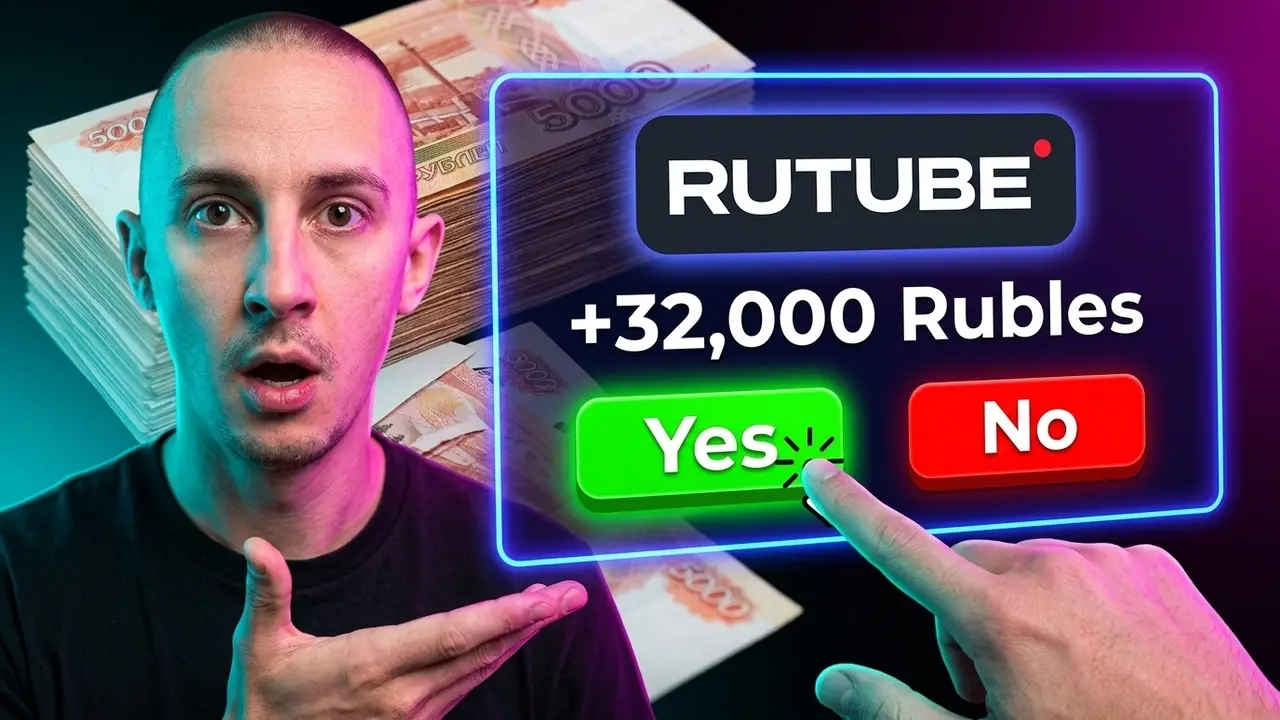
If you live outside Russia but create content in Russian or work with a Russian-speaking audience, RUTUBE can become an additional source of views and income.
Moreover, an author’s physical location outside Russia doesn’t necessarily mean giving up the Russian audience and platforms.
If you already have a YouTube channel, content and an established Russian-speaking audience, RUTUBE can be considered an additional channel for distribution and monetization.
RUTUBE Is Not Necessarily a Replacement for YouTube
You don’t have to choose between YouTube and RUTUBE.
A much more interesting model for a creator is:
YouTube + RUTUBE + other platforms = more distribution points for the same content.
If a video is already made, the main production costs (the idea, shooting, editing, the thumbnail and preparing the material) have already been incurred.
So publishing existing content on an additional platform can increase its potential return without having to create separate videos specifically for RUTUBE.
This is especially relevant for channels with a large archive library.
Why Foreign Creators Should Pay Attention to RUTUBE
The Russian-speaking audience is far from only in Russia.
Russian is used by viewers in Kazakhstan, Germany, Israel, the USA, Canada, Georgia, Armenia and other countries.
So the creator’s geography and their audience’s geography are not the same thing.
You can live in another country, earn income in another currency and still keep creating content for a Russian-speaking audience.
In that case RUTUBE can be one more platform where your content finds viewers.
RUTUBE Monetization for Foreign Creators
There is an important point here.
At the moment RUTUBE states that standard monetization can be connected by Russian residents with the status of self-employed, sole proprietor or legal entity. To apply you need to publish at least two videos and reach 20,000 cumulative views.
That is exactly why, for a creator outside Russia, the question of receiving payouts and legal status becomes especially important.
I Can Help With Connecting Monetization
I have a sole proprietorship in Russia, so I can act as a Russian partner for creators outside the Russian Federation who want to monetize Russian-language video content on RUTUBE.
If your channel meets RUTUBE’s requirements and has the necessary rights to the content, then after reaching the 20,000-view threshold, connecting monetization through a Russian sole proprietorship can be considered.
This lets a foreign creator avoid dealing on their own with the entire Russian legal and payment infrastructure.
It is important to understand, though: connecting monetization doesn’t automatically guarantee a particular income. The size of the reward depends on views, ad metrics and other factors.
Why the 20,000-View Threshold Isn’t Such a Big Problem
20,000 views may seem like a lot if you launch a channel from scratch.
But if you already have a YouTube channel with an active audience, the situation is completely different.
You can use your existing audience to bring the first viewers to RUTUBE.
In addition, the cumulative number of views of the channel’s content since January 1, 2021 is counted.
So for an active creator the task can be much easier than it seems.
And What If You Already Live Abroad?
That is exactly the kind of creator for whom RUTUBE can be interesting as an additional platform.
Imagine you live in Germany, the USA, Canada or Georgia.
Your main channel runs on YouTube. Most of the audience speaks Russian. You already have several hundred videos.
Instead of creating new content exclusively for RUTUBE, you can use your existing catalog:
YouTube → RUTUBE → additional audience → additional monetization.
Meanwhile the main YouTube channel keeps working as before.
A Large Content Library Is Your Asset
Over time a professional creator accumulates a huge archive.
100, 500, 1,000 or several thousand videos are no longer just the channel’s history.
They are a content asset that can be distributed across different platforms.
If a video remains interesting to the audience a year or two after publication, there is no point in treating it as “one-off.”
One piece of material can keep bringing views and income for several years.
That is exactly why a multi-platform strategy is becoming more and more interesting for professional creators.
Who This Model Especially Suits
First of all I would consider RUTUBE for:
Russian-Language YouTube Channels Outside Russia
If a creator has moved but keeps working with a Russian-speaking audience, RUTUBE can become an additional platform.
Channels With a Large Library
The more quality archive, the more interesting the additional distribution.
Music Projects
Music videos, live recordings and other content can get additional distribution.
At the same time the music rights and the possibility of using it on RUTUBE must be checked separately.
Media and Production Companies
Companies that regularly produce a large number of videos can use RUTUBE as an additional channel for distributing their content.
You Don’t Need to Create Content From Scratch
This is, perhaps, the main advantage.
If you already have a working YouTube channel, you don’t have to come up with a separate content strategy for RUTUBE.
You can adapt the process you already have:
idea → production → YouTube → RUTUBE → other platforms.
You still need to organize publishing properly: check rights, metadata, titles, descriptions, thumbnails and other parameters.
But There Is an Important Nuance: Content Rights
Having a video on YouTube doesn’t automatically mean you can place it on any other platform.
If the creator is not the rights holder of all the content, monetization may require supporting documents, for example a license, an agreement on the alienation of exclusive rights or the rights holder’s permission.
Check especially carefully:
- music;
- fragments of films and series;
- other people’s videos;
- images;
- sports broadcasts;
- materials of other creators.
So before connecting monetization it is important to make sure you really have the necessary rights.
How I Would Test RUTUBE
You don’t have to move the whole channel at once.
You can start with a small test.
Step 1. Choose the 50–100 most promising videos.
Step 2. Check the rights to the content.
Step 3. Create and set up a RUTUBE channel.
Step 4. Start publishing content.
Step 5. Gather the required 20,000 views.
Step 6. Apply for monetization.
Step 7. Compare views, income and distribution costs.
If the economics turn out positive, you can scale publishing to the whole archive.
Why I Find This Model Interesting
I work with YouTube channels, monetization, rights and content distribution, and I see one recurring problem.
Creators often try to increase income only through growth of the YouTube channel itself.
But sometimes it is much easier to increase the money that already-created content brings.
If a video is already shot, edited and published, the next question becomes:
Where else can this content work?
RUTUBE is one answer to that question for Russian-language creators.
Not Views for the Sake of Views
At the same time, I wouldn’t recommend moving content just for nice statistics.
20,000 views is only a threshold for the ability to apply, not a guarantee of earnings.
The most important thing is the economics.
You need to look at:
How many views does the content get?
How much income does it bring?
How much does its distribution cost?
Can the result be scaled?
Only after that should you decide on moving the whole library.
If You Live Outside Russia
If you are outside the Russian Federation but create Russian-language content, you may already have everything needed to test this model:
- a working YouTube channel;
- a ready video archive;
- a Russian-speaking audience;
- rights to the content;
- experience with video platforms.
What remains is to add one more platform and check its real economic effectiveness.
If your channel has already reached 20,000 views on RUTUBE and you need help connecting monetization through a Russian sole proprietorship, you can contact me.
I have an active sole proprietorship in the Russian Federation and can help organize the monetization connection for suitable creators and guide you through the process.
Summary
For a creator who lives outside Russia, RUTUBE doesn’t have to be an alternative to YouTube.
It is much more interesting to see it as an additional channel for distribution and monetization of Russian-language content.
If you already have an audience and a large video library, trying an additional platform can be much easier than creating a new media project from scratch.
And if the channel has already reached the required indicators, including 20,000 cumulative views and at least two published videos, you can move on to connecting partner monetization.
YouTube creates content.
RUTUBE can become one more point where that content brings results.